

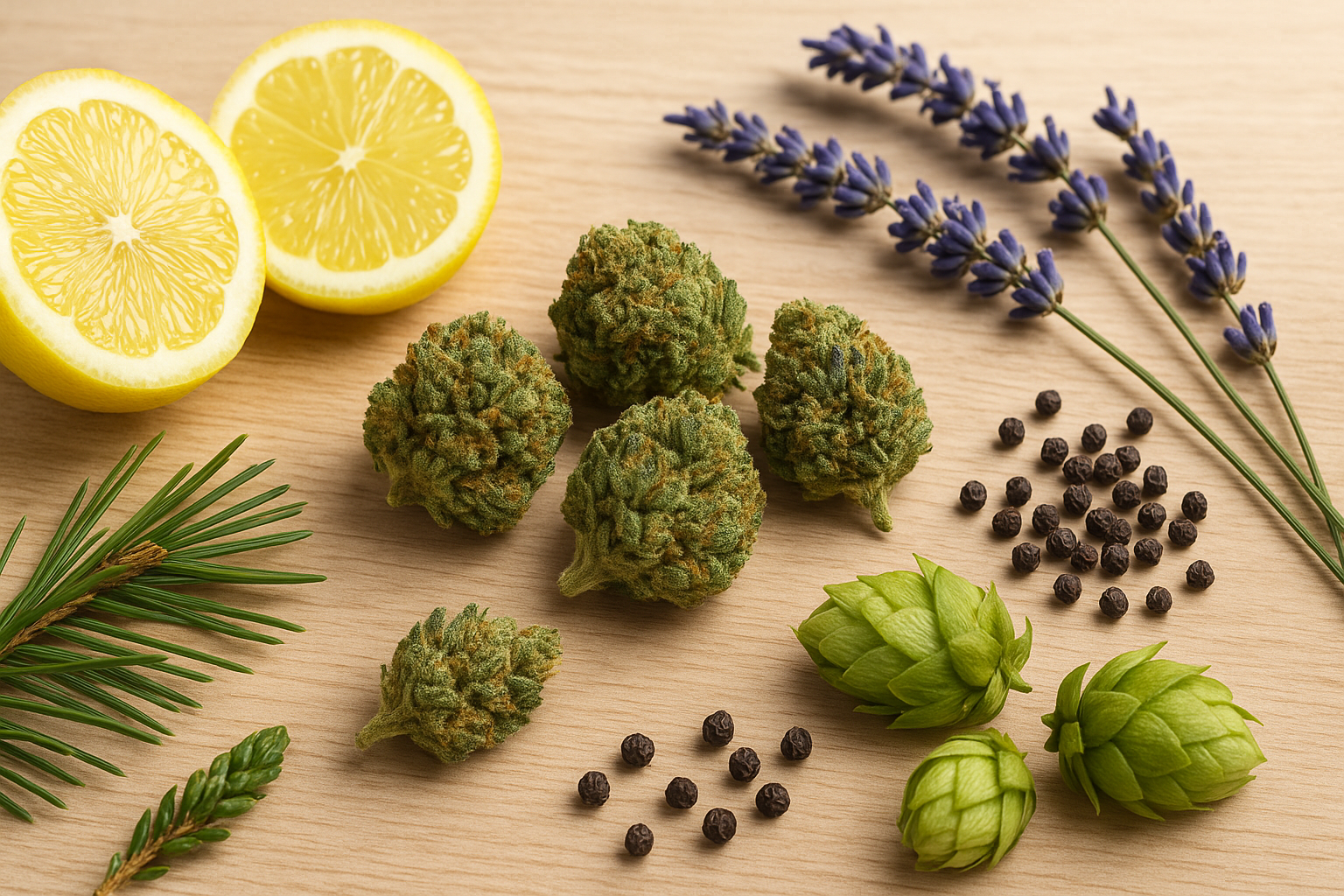
Terpenes are the unsung heroes of cannabis, responsible for the plant’s incredible variety of aromas, flavors, and nuanced effects. This guide takes you through what terpenes are, how they interact with cannabinoids, and how to use terpene profiles to make smarter cannabis choices.
What Are Terpenes?
Terpenes are naturally occurring aromatic compounds found in plants, herbs, and even some fruits. They give lavender its floral scent, pine trees their sharp freshness, and citrus fruits their zesty punch. In cannabis, terpenes are produced in the trichomes (the same resin glands that make cannabinoids like THC and CBD).
Beyond smell, terpenes play a functional role for the cannabis plant: they help repel pests, attract pollinators, and protect against environmental stress. For consumers, they’re what make one strain smell fruity and uplifting while another smells earthy and sedating.
Why Terpenes Matter in Cannabis
- Aroma & Flavor: Terpenes are responsible for the signature scent and taste of each strain. The lemony zing of Lemon Haze and the peppery kick of GSC both come from terpene dominance.
- Entourage Effect: Research suggests terpenes work together with cannabinoids in a phenomenon known as the “entourage effect,” shaping how THC or CBD feel in your body.
- Perceived Effects: While not intoxicating by themselves, terpenes are commonly associated with certain effects — for example, myrcene with relaxation, or limonene with mood elevation.
The Most Common Cannabis Terpenes
While more than 150 terpenes have been identified in cannabis, a handful dominate most strain profiles. Below is a breakdown of the most frequently encountered terpenes and what they’re known for.
| Terpene | Aroma & Flavor | Also Found In | Common Associations* | Example Strains |
|---|---|---|---|---|
| Myrcene | Earthy, musky, clove-like | Mango, hops, thyme | Deep relaxation, “couch-lock” reputation | OG Kush, Granddaddy Purple |
| Limonene | Citrus zest, lemon, orange | Citrus rinds | Bright mood, energy, focus | Lemon Haze, Wedding Cake |
| Caryophyllene | Spicy, peppery, woody | Black pepper, cloves | Grounding, stress-soothing | GSC, Bubba Kush |
| Pinene | Pine needles, fresh forest | Pine, basil, rosemary | Crisp focus, alertness | Jack Herer, Blue Dream |
| Linalool | Floral, lavender, sweet | Lavender, rosewood | Calming, stress relief | Do-Si-Dos, Lavender |
| Humulene | Woody, earthy, hops-like | Hops, coriander | Balanced, subtle depth | White Widow, Headband |
*Reported associations are anecdotal and may vary by individual. Scientific research into terpene effects is ongoing.
How to Identify Terpenes in Cannabis
Want to start exploring terpenes in your own cannabis use? Here are three approaches:
- Use Your Nose: Trust your senses. Citrusy strains often contain limonene, while earthy, musky strains tend to be myrcene-heavy.
- Check Lab Results: Many dispensaries provide certificates of analysis (COAs) that list terpene percentages alongside THC and CBD content. This is the most accurate way to know a strain’s terpene profile.
- Reference Reliable Guides: Our Strain Glossary organizes terpene data so you can compare profiles across hundreds of strains.
Pairing Terpenes With Your Desired Experience
Instead of chasing THC percentages, try choosing strains based on terpene dominance. Here’s a simple framework:
- For Relaxation & Sleep: Look for strains high in myrcene or linalool.
- For Energy & Focus: Choose strains dominant in limonene or pinene.
- For Balance: Hybrids with a mix of caryophyllene and humulene often feel versatile and well-rounded.
Terpene awareness can also enhance cannabis cooking. For example, limonene-rich strains pair well with citrus desserts, while caryophyllene’s peppery kick complements savory dishes.
Tips for Exploring Terpenes as a Consumer
- Keep a journal: Track strain names, aromas, and how they made you feel.
- Experiment with variety: Try different terpene profiles rather than sticking to THC numbers alone.
- Notice patterns: Over time, you’ll discover which terpenes resonate with your body and preferences.
Final Thoughts
Terpenes are much more than cannabis “flavorings.” They’re key to the plant’s complexity, shaping not only the sensory experience but also how strains may feel. Paying attention to terpene profiles helps you move beyond THC percentages and toward a more personalized cannabis journey.
Explore terpene-rich strains in our comprehensive Strain Glossary, or experiment in the kitchen with cannabis-infused recipes. By learning to recognize terpenes, you’ll unlock a deeper appreciation for cannabis’ diversity.