

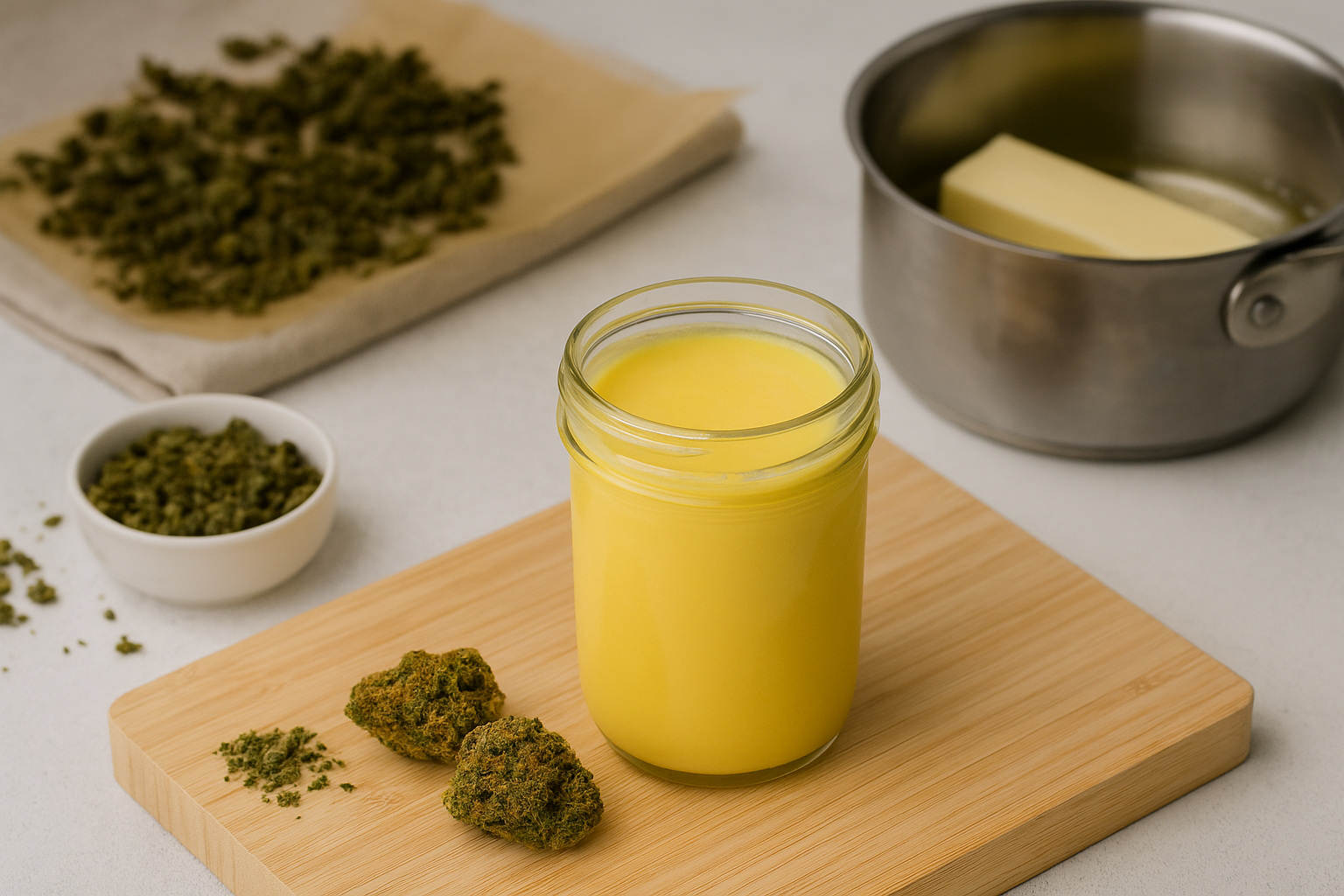
Learn how to make perfect cannabutter with our step-by-step guide, dosage tips, and strain + flavor pairing suggestions — the ideal base for every infused recipe.
Why Cannabutter is a Kitchen Essential
Cannabutter is the golden ticket to endless infused edibles — from fudgy brownies to gourmet sauces. Whether you’re crafting a couch-locking dessert or a bright, uplifting brunch dish, a well-made cannabutter ensures consistent potency, smooth flavor, and culinary versatility.
This guide walks you through the process step-by-step, offers dosage tips so you get the effect you want, and even includes strain and flavor pairing suggestions to match your recipe style.
What You’ll Need
Ingredients
- 1 cup (8 oz) unsalted butter
- 1 cup (7–10g) decarboxylated cannabis flower (adjust potency as desired)
- 1 cup water (helps regulate temperature and reduce scorching)
Equipment
- Baking sheet
- Parchment paper
- Saucepan or double boiler
- Fine mesh strainer or cheesecloth
- Heatproof container or jar
- Rubber spatula
Step 1: Decarboxylate Your Cannabis
Why: Raw cannabis won’t get you high — you need to activate THC (or CBD) through heat.
- Preheat your oven to 240°F (115°C).
- Break up buds into pea-sized pieces — avoid grinding too fine.
- Spread evenly on a parchment-lined baking sheet.
- Bake for 30–40 minutes, gently mixing halfway through.
Pro Tip: Different cannabinoids have different activation points. THC optimizes around 240°F; for high-CBD strains, 230°F works well.
Step 2: Melt the Butter
- In a saucepan or double boiler, combine butter and water over low heat.
- Allow butter to fully melt without bubbling — you want a gentle simmer, not a boil.
Step 3: Infuse the Butter
- Add decarbed cannabis to the melted butter-water mix.
- Simmer on low heat (160–180°F) for 2–3 hours, stirring occasionally.
- Keep temperature below 200°F to preserve cannabinoids and terpenes.
Step 4: Strain & Store
- Place cheesecloth or fine mesh strainer over a heatproof jar or bowl.
- Pour the mixture through slowly, letting gravity do the work (don’t squeeze the plant matter — it can add bitterness).
- Allow to cool at room temperature, then refrigerate until solid. The butter will separate from any residual water — scrape it off and store in an airtight container in the fridge for up to 2 months or freeze for 6 months.
Dosage Tips
Calculating potency is easier with a formula:
Potency (mg THC per teaspoon) = (Cannabis weight in grams × THC % × 1,000) ÷ Total teaspoons of butter
Example:
- 7g cannabis at 20% THC = 1,400mg total THC
- 1 cup butter = 48 tsp
- 1,400 ÷ 48 = ~29mg THC per tsp
Beginner Dose: 5–10mg THC per serving
Experienced Dose: 15–30mg THC per serving
Always start low, go slow, and clearly label your cannabutter.
Strain & Flavor Pairing Suggestions
| Strain | Flavor Notes | Best In… |
|---|---|---|
| Lemon Haze | Citrus, sweet, zesty | Lemon bars, salad dressings |
| Wedding Cake | Vanilla, creamy, nutty | Cookies, pastries |
| Pineapple Express | Tropical, fruity, fresh | Smoothies, grilled seafood |
| OG Kush | Earthy, herbal, peppery | Savory sauces, roasted meats |
Troubleshooting
- Butter tastes too “green” → Lower infusion time/temperature, strain more thoroughly.
- Too weak → Use higher potency cannabis or increase flower amount.
- Too strong → Dilute with additional plain butter in recipes.
Recipe Ideas Using Cannabutter
- Classic Pot Brownies – fudgy and foolproof.
- Garlic Herb Infused Bread – savory and shareable.
- Cannabis Chocolate Truffles – decadent dessert with a kick.
Final Thoughts
A jar of classic cannabutter is the Swiss Army knife of cannabis cooking — ready to elevate everything from baked goods to gourmet entrées. Master this recipe, and you’ll have a potent, flavorful base for endless edible creativity.